


As the US-Iran conflict oscillates between combat and ceasefire, urgent questions persist about how Russian technology, knowledge, talent, infrastructure, and other capabilities and resources are supporting Iranian unmanned aerial vehicle (UAV) activity—and vice versa.
Media investigations and open-source research have well-publicized the many touchpoints between the UAV sectors in Russia and in Iran. By August 2022, shortly after Russia launched its full-scale invasion of Ukraine, Iranian transport planes delivered Iranian-made combat drones to Russia, according to The Washington Post. Russia has subsequently launched thousands of Iran-made Shahed attack drones against Ukrainian targets. The US government publicly stated in June 2023 that Iran had “offered to provide UAV production technology and facilities” to Russia (as well as Tajikistan), on top of already having “transferred hundreds of Shahed- and Mohajer-series UAVs to Russia.” The Russian government then built such a UAV plant in Russia. Now, Russia is sending upgraded drones back to Iran, including with improved navigation capabilities, developed amid Russia’s full-scale war on Ukraine.
These UAV touchpoints matter for the security activities and threats posed by the Russian and Iranian governments. In the former case, the Putin regime continues to rapidly innovate with UAV technology—including in response to Ukrainian innovation and adaptation—to continue its slaughter in Ukraine and against the Ukrainian people. In the latter case, growing attention to Iran’s UAV capabilities and its ability to share those capabilities with other states underscores both security risks in the region as well as broader risks of technology and knowledge diffusion.
This post analyzes open-source information on a Russian military center and reports of Iranian UAV training efforts to illustrate the variation in touchpoints between Russia and Iran across UAV knowledge-sharing, training, and technology R&D. It concludes with some pressing questions for further research around any other, observable relationships between Iranian and Russian UAV organizations, their activities, and the potential implications for US and Western security.
Case Study: Russia’s Rubicon Center
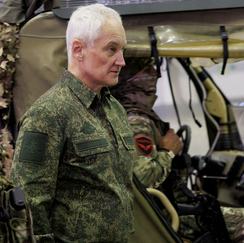
The Rubicon Center for Advanced Unmanned Technologies (Центр перспективных беспилотных технологий Рубикон), located in Moscow Oblast in Russia, is a Russian military organization focused on drone warfare. Russian Minister of Defense Andrey Belousov created Rubicon in August 2024. Belousov has since stated that Rubicon was established to prepare UAV techniques, methods, and new weaponry, including to innovate in UAV range, autonomy, and immunity to interference. The Center also trains Russian personnel on UAVs, including training instructors, drawing on combat experience. It has engineers, technicians, communications specialists, logisticians, military medics, reconnaissance experts, and analytical groups on staff and has more recently, among other things, pushed more into AI use for UAVs.
Rubicon appears to have at least some indirect touchpoints to the Iranian government. As Svoboda, the Russian-language arm of Radio Free Europe/Radio Liberty, has documented, a Russian Ministry of Defense (MOD) official—Yevgeny Shmyrin, who runs a special projects and research division at the MOD—appears to be affiliated with Rubicon and has also participated firsthand in negotiations with Iran. A representative of his department, specialized in advanced weapons development, also traveled to Iran on an official Russian government delegation in April 2024 and September 2024. During the latter trip, the Russian officials reportedly visited an Iranian missile base. While many parts of the Russian government ostensibly maintain contact with many other government organizations around the world, including in Iran, the focus of the MOD department (e.g., advanced weapons development) and its ties to an R&D center for UAVs (of high interest to Iran) make these Iran touchpoints stand out. The MOD department in question that sent a representative to Iran, the Department of Prospective Interspecies Research and Special Projects (“interspecies” here referring to inter-military branch activity), also appears to run instructional sessions at the same facility that houses the Rubicon Center.
These Iran touchpoints are particularly concerning as Rubicon advances some of the global state-of-the-art UAV use in war. For example, by August 2025, Rubicon claimed its drones could destroy enemy drones in flight with kinetic ramming or targeting vulnerable elements of the drone; that they had improved video systems and stabilization systems; and that they would in the future have automatic targeting support, among others. In March 2026, Rubicon debuted a commercial that showed Russian domestic analogues of Starlink—the Spirit-030 («Спирит-030») and Square («Квадрат»)—satellite communications terminals. While some might describe elements of these advertised capabilities or technologies as distinct from UAVs, the battlefield reality in Russia means that technology designed for a range of potential purposes is almost necessarily going to be applied to the Russian state’s war efforts, especially when relevant to UAV warfare.
Reports cited above that Russia is now sending improved UAVs back to Iran raises troubling questions about the potential for any number of Russian R&D centers or operational units, including the Rubicon Center, to play a role in this technology transfer. The same goes for a recent report alleging that the Russian government has recently begun sharing tactical insights on UAV combat with Iran: it similarly raises troubling questions about the potential for Russian R&D centers or operational units to play a role in knowledge transfer to Iran, too.
Case Study: Iranian Training
The US government declassified and publicized intelligence in August 2022 that Russian officials had visited Iran for UAV training over a few weeks, after Iran had earlier hosted Russian personnel at Kashan Airfield in June 2022 to show them Shahed-191 and Shahed-129 drones. (Unsurprisingly, Iranian and Russian officials have disputed such claims, although the Iranian government has acknowledged that Iran did supply UAVs to Russia.)
Ukraine’s General Staff said in October 2022 that the Iranian and Russian government agreed that Iranian advisors and instructors would travel to Russia to train individuals on using attack UAVs. Reportedly, the Islamic Revolutionary Guard Corps (IRGC) deployed trainers to a Russian military base in Crimea, “far from the front lines,” to train the Russians on how to fly the drones. Iran’s alleged decisions to both host Russian personnel within the country and to send its own state personnel outside the country (to Russia) to train Russians constitute far more than the passing of knowledge and information.
Especially with UAVs, training offered in person could provide a level of hands-on guidance that cannot be offered remotely, allow for more tailored and real-time feedback on (Russian) personnel skills and decisions that improve learning, and overall provide for more interaction between instructors and students that yield additional benefits. This is to say nothing of the fact that Iranian personnel could then ostensibly derive their own lessons from visiting Russia or Ukraine and from making their own observations about what did or did not work well (regardless of whether they shared said points with the Russians). Such training activities, in the context of all the technology transfer and knowledge sharing back and forth, further strengthen UAV-related feedback loops between the security communities of Iran and Russia.
Conclusion
Diving deeper beyond high-level mentions of Russian-Iranian “cooperation” on UAVs underscores at least several touchpoints that appear to span technology transfer, knowledge sharing, and institutional partnership.
These engagements between different actors in Iran and Russia are not exclusive to UAVs in warfare. Russia and Iran already have several touchpoints between their private-sector cyber sectors, including a known Russian intelligence contractor getting approval from the Iranian government to provide cyber defensive services for certain systems. Cooperation between Russia and Iran appears to be expanding in several other areas as well, such as Russian space delegations visiting Iran and subsequently establishing a new memorandum on creating sensing and telecommunications satellites, conducting tests and training, and more.
For UAVs in particular, however, the impacts of Iranian-Russian touchpoints are arguably less open-ended and less future-facing (e.g., compared to cyber or space) and more clearly tied to improvements in both countries’ military capabilities, technologies, and knowledge. One retired Russian military colonel, known for his pro-Kremlin propaganda, has asserted that Russia lacked modern drone tactics when the war started but, with the help of Iranian experience, were able to improve Russia’s capabilities, expand domestic UAV production, and ultimately modernize the technologies. Unfortunately, media reports, information publicly released by the US and other governments, and open-source information indicate this statement about Iran’s role in improving Russian UAV R&D and use is an accurate characterization.
Alongside higher-level questions about Iranian-Russian UAV touchpoints—including strategic questions about shared objectives, future R&D directions, and lessons learned thus far on multiple fronts—is it worth further exploring at least several additional questions.
- Are there particular organizations in Iran most involved with training Russian personnel on UAVs? To what extent, if at all, are Iranian private-sector companies or universities involved in these efforts and to what ends?
- Does the Russian MOD’s Department of Prospective Interspecies Research and Special Projects maintain connections with Iran? Have there been more recent site visits in either geographic direction, and have they yielded any clear results?
- How have Russia’s Rubicon Center and other UAV-focused Russian organizations (not covered here) interacted with the manufacturers or suppliers of Iranian-supplied drone technology? Do they provide questions, feedback, and so forth to those Iranian entities?
- What other Iranian-Russian research agreements, partnerships, and touchpoints have impacted either country’s ability to research, develop, deploy, and refine UAV capabilities specifically geared for counter-drone or offensive, battlefield functions?
